Parking Guidance Solutions
Going Beyond the Building: Addressing Hospital Safety in Parking Facilities
Healthcare facilities have always been places of healing, compassion, and care. Yet in recent years, conversations...


Healthcare facilities have always been places of healing, compassion, and care. Yet in recent years, conversations around hospital safety have increasingly expanded beyond patient rooms and nurses’ stations. As incidents of workplace violence continue to impact healthcare organizations nationwide, many hospitals are taking a broader view of security; one that includes the parking facilities used by patients, visitors, and staff every day.
Healthcare workers face unique challenges when it comes to workplace violence. According to the U.S. Bureau of Labor Statistics and healthcare industry organizations, nurses, emergency department staff, behavioral health professionals, and other frontline caregivers experience higher rates of workplace violence than workers in most other industries. These incidents can range from verbal threats, harassment, and intimidation to physical assaults committed by individuals who may be experiencing mental health crises, substance abuse issues, or heightened emotional distress. While much of this violence occurs within healthcare facilities themselves, security experts increasingly recognize that risks can extend beyond hospital walls to parking garages, surface lots, and pedestrian pathways used by employees, patients, and visitors.
Healthcare workers are repeatedly identified as one of the workforce groups most exposed to workplace violence, and hospital parking lots and garages remain a persistent blind spot.
For healthcare workers (especially those arriving before dawn, leaving after overnight shifts, or walking alone between facilities) the journey to and from their vehicle can be a source of concern, especially in the wake of tragic hospital parking lot attacks. Patients and visitors navigating unfamiliar campuses may share similar feelings, particularly during evening hours.
The good news is that advances in intelligent parking technology are helping healthcare organizations create safer, more secure environments without sacrificing convenience or operational efficiency.
"Hospital security isn't just about protecting what's inside the building anymore. Employees, patients, and visitors deserve to feel safe from the moment they arrive on campus until the moment they leave. Parking facilities are an essential part of that security strategy, not an afterthought,” shared Jeff Sparrow, Director of Sales, TKH Security.
One of the challenges with traditional parking security is limited visibility. Conventional surveillance systems often focus on entrances, exits, stairwells, and elevators, leaving the majority of the parking facility with less coverage or none at all.
Camera-based automated parking guidance systems (APGS), like the Park Assist Solution, offer a different approach.
The Park Assist Solution's M5 Smart-Sensor provides parking occupancy detection with HD cameras and integrated license plate recognition technology. Installed throughout a facility, each sensor provides visibility across multiple parking spaces, creating a comprehensive network of coverage throughout the garage. This expanded field of view helps security teams maintain awareness of activity across the facility rather than relying solely on perimeter cameras.
For surface lots and open top levels of parking structures, the S2 Outdoor Solution extends the same intelligent monitoring capabilities to surface parking areas, helping healthcare campuses maintain consistent visibility across their entire parking infrastructure.
Capturing video is only part of the equation. The ability to quickly identify, assess, and respond to potential incidents is equally important.
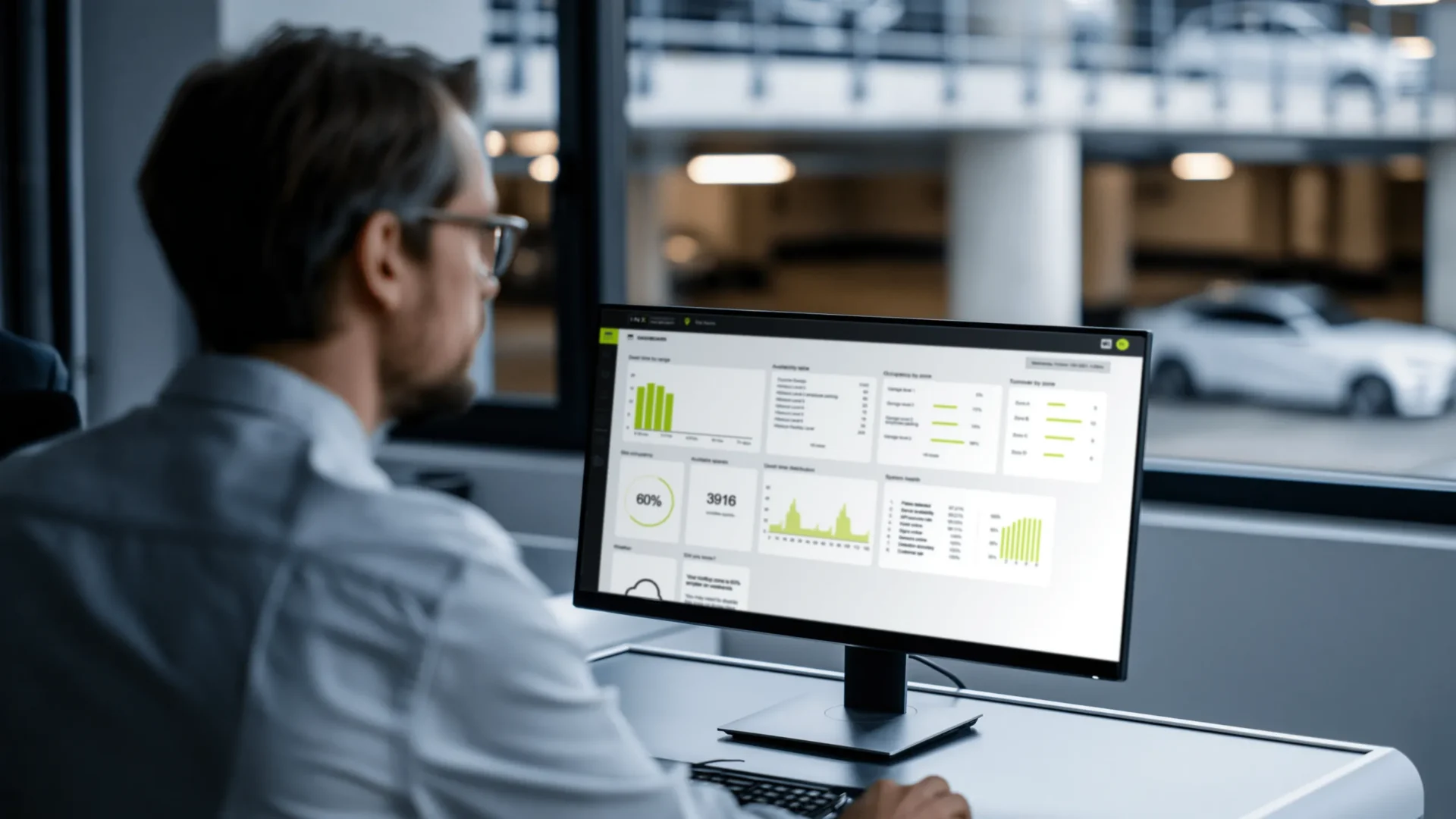
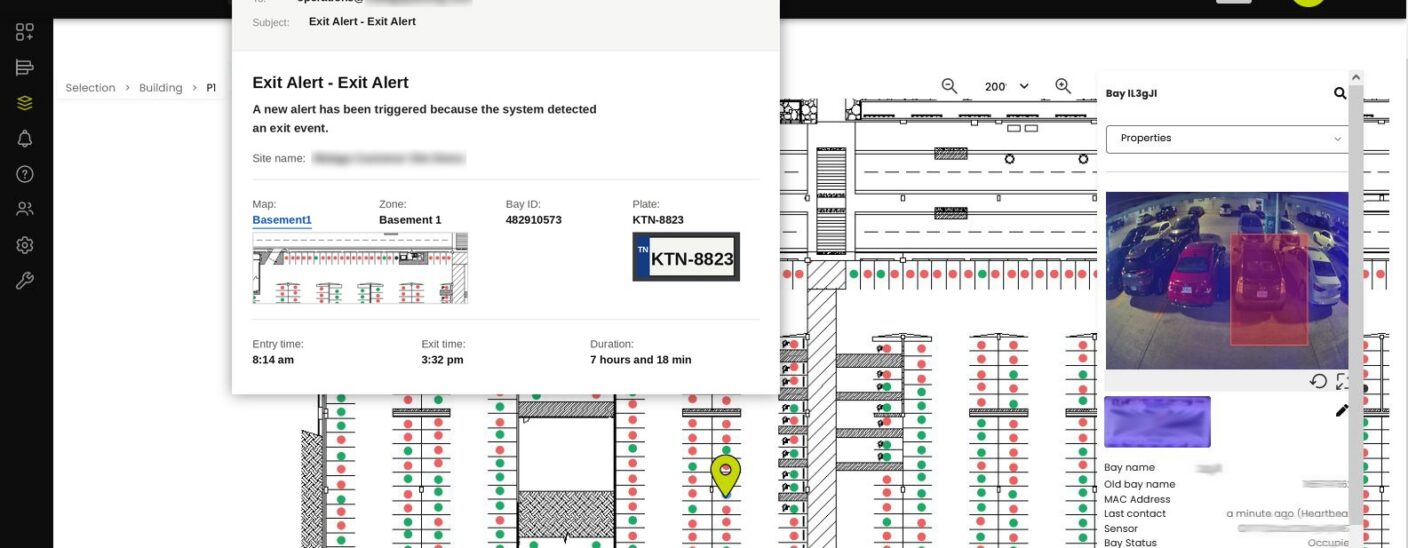
Using the INX software platform, healthcare security teams can access live video feeds, occupancy data, historical footage, and facility-wide analytics from a centralized dashboard. Combined with Park Surveillance, security personnel gain access to HD video monitoring and recorded footage that can assist with investigations, incident response, and collaboration with law enforcement when necessary.
This unified approach helps security teams move beyond reactive investigations and toward greater situational awareness.
Video surveillance provides valuable visibility, but License Plate Recognition (LPR) adds another layer of actionable intelligence.
Integrated LPR technology can automatically capture and identify vehicles entering and exiting a parking facility, giving security personnel greater awareness of campus activity without requiring manual monitoring. In the event of an incident, security teams can quickly search historical records by license plate, helping accelerate investigations and provide law enforcement with valuable information.
LPR can also support proactive security initiatives by alerting personnel when vehicles on watch lists enter the facility, enabling faster response to potential concerns while maintaining a seamless parking experience for authorized users and visitors.
Together with LPR technology, artificial intelligence is becoming an increasingly valuable tool for healthcare security professionals. Modern video analytics can help identify unusual activity, improve monitoring efficiency, and support faster decision-making.
When integrated within a broader security ecosystem, technologies such as weapon detection and facial recognition can provide additional layers of awareness for security personnel. Rather than replacing human judgment, these tools help teams focus attention on potential concerns more quickly and efficiently than ever before.
For large healthcare campuses that serve thousands of employees, patients, and visitors daily, AI-assisted monitoring can be a valuable force multiplier for security operations.
Unfortunately, no technology can eliminate every security risk. However, healthcare organizations can take meaningful steps to reduce vulnerabilities, improve visibility, and support faster responses when incidents occur.
"The goal isn't simply to record what happened after an incident,” added Sparrow. “It’s to provide security teams with the visibility and intelligence they need to respond faster, make better decisions, and help create a safer experience for everyone on campus."
As hospitals continue investing in workplace violence prevention programs and campus-wide security initiatives, parking facilities deserve the same level of attention as the buildings they serve. By combining intelligent parking guidance, comprehensive surveillance, real-time analytics, and AI-powered security tools, healthcare organizations can create safer environments for employees, patients, and visitors from the moment they arrive until they leave. Safety in healthcare should not begin at the hospital entrance. It should start the moment someone enters the campus.
Healthcare facilities have always been places of healing, compassion, and care. Yet in recent years, conversations...
A major milestone has been reached at Detroit Metropolitan Wayne County Airport (DTW), where the new Park Assist...

With more than 30 years in the parking industry, Jeff Sparrow has seen parking evolve from a largely operational...